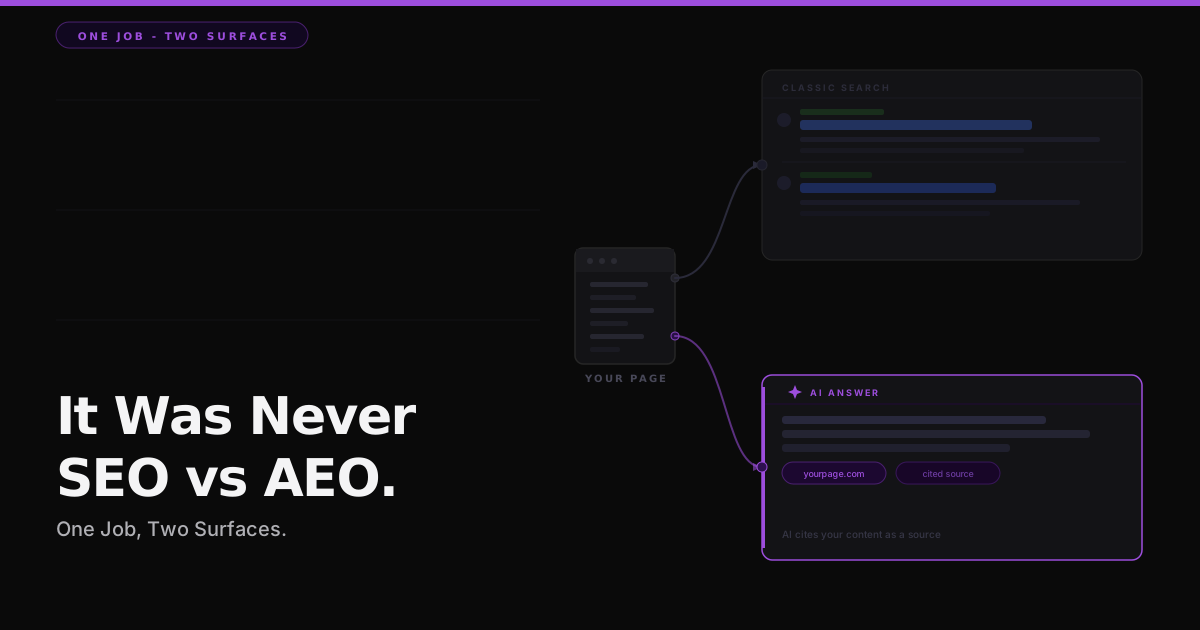
You do not need an AEO team. You need to do one job well, then check it against two surfaces. The whole SEO-versus-AEO argument is a false binary, and mostly it exists to sell you a new acronym, a course, and a second budget line.
Search did not fork into two disciplines this year. The job is what it always was: make your page the source an answer gets built from. What moved is where that answer renders. There used to be one place it showed up. Now there are two.
There was only ever one job
Strip away the acronyms and the work is identical. Be the genuinely best, most specific answer to a real question. Be crawlable and cleanly parseable. Be factually accurate, because vague and hedged pages get skipped. Keep your entities, name, and claims consistent so nothing sends a mixed signal. Earn trust and citations elsewhere so a machine has a reason to trust you at all.
None of that is new. It is what good SEO always rewarded, back when we called it earning the ranking. The only test bolted on top is simple to state: would a model pick your page as the source, and would it represent what you said correctly? That is the entire delta between the old work and the new. One question, not a new profession.
What changed is the surface, not the work
Here is the part the debate skips. There are now two places your answer can show up, and you are competing on both at the same time, with the same page.
Surface one is the classic ten blue links. It still exists and people still click it, but the click-through is sliding as answers move up the page. Zero-click searches have been rising for years, and AI summaries pushed that further. This is the surface every SEO already knows how to fight for.
Surface two is the synthesized answer itself. Google AI Overviews, ChatGPT, Perplexity, Gemini. Here you do not win a link. You show up as a cited source, or as the actual substance of the answer, and often there is no click at all. Your words get read back to someone who may never see your site.
Same page. Same work to make it good. Two very different ways it can pay off, and a debate that pretends they need two teams.
The tricks that only ever fooled the first surface
Think about what never helped surface two. Keyword stuffing. Thin pages spun up for a single query. Link schemes. Doorway content that ranks for a phrase and says nothing once you land.
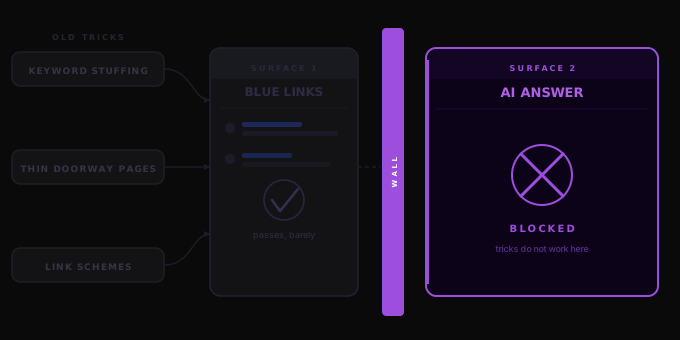
Those were always SEO-only tricks, and they only ever worked on the first surface, and even there less every year. They do nothing on the answer surface, because a model reading your page for substance has no reason to quote a page with no substance. So the split people are selling has it backwards. AEO is not a new discipline that replaced SEO. It is old SEO with the shortcuts stripped out, now judged by whether a machine would stake its answer on you.
What to do Monday
Stop standing up a separate AEO function and stop buying the rebrand. Do the one job, then run the page past both surfaces. Three concrete moves.
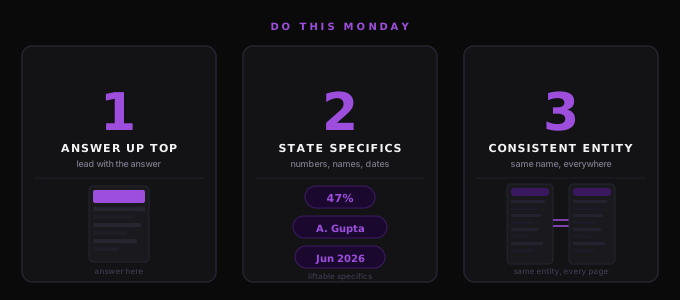
Put the extractable answer near the top, in plain language. If a model reads visible text and a reader never scrolls past the summary, the complete answer has to sit where both can grab it fast. Lead with the conclusion, then support it.
State specifics a model can lift. Numbers, names, dates, exact figures. A model quoting you needs something concrete to quote, and specifics are what get cited correctly instead of paraphrased into mush.
Keep your entity consistent. Same brand name, same claims, same facts across your pages, so a model never gets a mixed signal about who you are or what you said. A contradiction between two of your own pages is a reason to pick someone else.
You can pressure-test the structure against surface two with the SEO + AEO Content Rater, which scores direct-answer sentences, question headings, and paragraph length as a separate grade from classic SEO. If you want the tactical detail, I wrote up the schema and citation side in Search cut your clicks in half, where the short version is that the fix isn't more schema. And to measure surface two over time, I'd track share of AI voice instead of a rank you used to own.
The honest caveat
I am not going to hand you a guaranteed playbook, because there isn't one. The answer surfaces move. The same question can return a different answer across runs, prompts, and weeks, so any single check is a snapshot, not a law. And a lot of the tidy citation-share numbers floating around come from vendors selling AEO software, so treat those as marketing until someone shows you the method behind them.
What I am confident about is the direction. Click-through on the old surface is down, and the answer surface is where a growing share of attention now lands. Doing the one job well is the only move that pays on both, whichever way the exact numbers settle.
Where this leaves you
The next time someone tells you SEO is dead and AEO is the new thing, ask what they are actually selling. The job did not change. It picked up one more surface to satisfy and one fewer place to hide a shortcut. A page that is genuinely the best answer, written in plain language a machine can lift, wins the link and the citation. A page built to trick a ranker wins neither anymore.
When did you last read your own top page and ask, honestly, would a model build its answer out of this, and would it get me right?
Amit