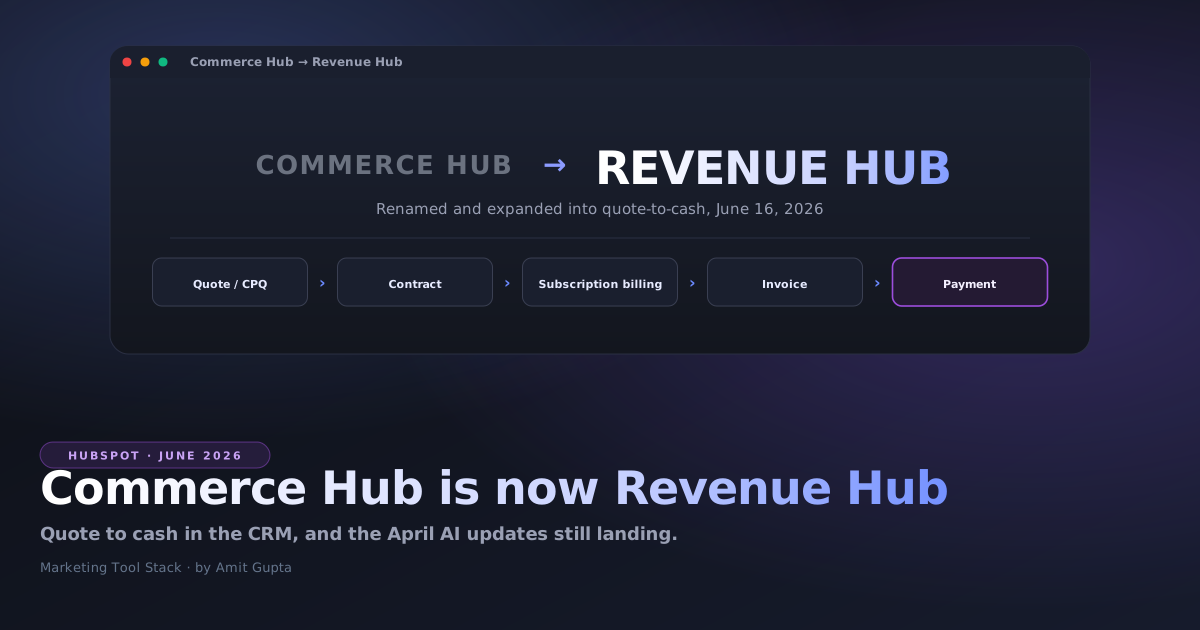

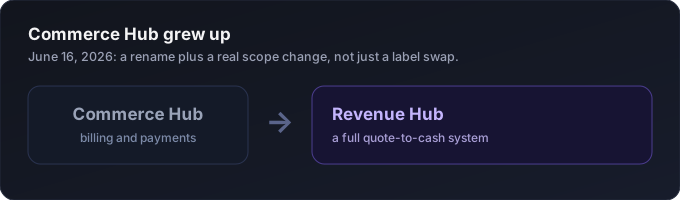
On June 16, 2026, HubSpot renamed Commerce Hub to Revenue Hub and expanded it from billing and payments into a full quote-to-cash system. If you searched "what is new in HubSpot" this month and got a wall of AI announcements, here is the honest split: most of that was April. Revenue Hub is the part that is from the last few weeks.
I spend a lot of my week inside HubSpot, and the hardest question to answer for a team is not "what did HubSpot announce," it is "what actually changed in our portal, and do we have to do anything about it." So let me separate the real June news from the April news that keeps resurfacing as if it shipped yesterday. Every date and price below traces to a HubSpot-owned page, not a recap blog.
What Revenue Hub actually is
Per HubSpot's own announcement, "Introducing Revenue Hub: Quote to cash, finally in one place," dated June 16, 2026 and marked "available today," the product formerly known as Commerce Hub is now Revenue Hub. It is not just a relabel. The product page describes it as HubSpot's connected system for quoting, contracts, billing, and payments, which expands the old Commerce Hub scope into quoting and CPQ, contracts, subscription billing, invoicing and payments, all unified in the Smart CRM.
The important word for anyone already on Commerce Hub is that no forced migration has been reported. This is a rebrand plus an expansion of the same product line, so your existing flows keep running while the labels and the capabilities grow. That is the calm version of a product change, and it is rarer than it should be.
What it means for marketing ops
If you use Commerce Hub today, you will see the Revenue Hub name in your portal, and your current billing, payment and quote flows keep working. The action is small and worth doing: audit those flows once so nothing surprises you, then look at the expanded CPQ, contract, and subscription-billing features to see whether they let you retire a bolt-on quoting or billing tool you are paying for on the side.
The bigger picture is the one marketing ops has wanted for years. Quote-to-cash living in the same CRM as your marketing and sales data means the path from a lead to actual recognized revenue sits in one system, not stitched across three. That is the promise. Whether it holds depends on how clean your data model was before any of this, which is a different fight and the one I care about most.
The AI news you keep seeing is mostly April, not now
Here is the reframe that saves you time. HubSpot's headline 2026 AI releases, native AEO, the Breeze agents, Smart Deal Progression, and the AI Connectors, were announced at the Spring 2026 Spotlight on April 14, 2026, roughly three months before this post. HubSpot said most features were generally available at launch, with the rest rolling out through the summer. So a subset is only reaching your portal now, which is exactly why it feels like new news. Check what is actually live for you before you plan around any of it.
HubSpot AEO, the one marketers should actually look at
Of everything from the Spotlight, the piece most relevant to a marketing team is HubSpot AEO, Answer Engine Optimization, launched in public beta on April 14. Per the product page, it tracks and works to improve your brand's visibility across AI answer engines like ChatGPT, Gemini, and Perplexity, including competitor share of voice, and it uses your own CRM data to suggest the prompts real buyers are likely to type. Pricing, per HubSpot's knowledge base, is 50 dollars a month standalone (45 with an annual plan, 25 tracked prompts, 28-day trial, no plan required), or embedded in Marketing Hub Professional at 25 prompts a day and Enterprise at 50 a day.
This is the same shift I have been writing about: answer engines are absorbing clicks that used to land on your page. Before you pay for a beta to measure it, you can pressure-test the thing that actually moves AEO, which is answer-first structure and being the source an AI quotes. Run a page through the free SEO and AEO content rater first, and read the share of AI voice piece for the metric behind all of this. Honesty over promotion: the tool is worth trying, but the work comes first.
The other June items
Two smaller changes actually landed in late June and both matter more than they look. Feature-level credit limits arrived in June 2026: admins can now set a credit spend limit on an individual AI feature from the Usage and Limits dashboard, where before the cap was portal-wide only. When a feature hits its limit, its credit usage is blocked until you reset it. This is available on Starter, Pro and Enterprise, and it is not optional housekeeping. The Breeze agents moved to outcome pricing back in April, at 1 dollar per recommended lead for the Prospecting Agent and 50 cents per resolved conversation for the Customer Agent, so an agent left running without a cap is an invoice left running without a cap. Set the limits before you turn the agents loose.
The second is for the ops and developer side. On June 29, 2026, HubSpot added a read-only system
property, hs_current_customer, on companies, contacts and custom objects, per the
developer changelog.
It is system-managed and queryable through the CRM API, and it powers the default filters in the
Customer Success workspace. If you have been maintaining your own "is this a customer" flag with
a workflow, this replaces that bookkeeping with a property HubSpot keeps current for you.
What to do
- Confirm the Revenue Hub relabel did not disturb your billing, payment, or quote flows, then review the expanded CPQ and subscription features against tools you pay for separately.
- If you run marketing on HubSpot, trial AEO if you like, but treat every vendor performance number as a claim to verify against your own data, and start with your answer-first structure.
- Before you enable an outcome-priced Breeze agent, set a feature-level credit limit so usage cannot outrun your budget.
- Swap any hand-maintained customer flag for
hs_current_customerin your segments.
And if you are standing HubSpot up rather than maintaining it, the order you build in still decides whether the automation helps or just moves the mess faster. I put the whole sequence in the HubSpot onboarding guide.
So the real question this month is not whether HubSpot shipped a hundred things this year. It is narrower and more useful: do you know which of those things are live in your portal today, and which are still a beta on a slide?
, Amit