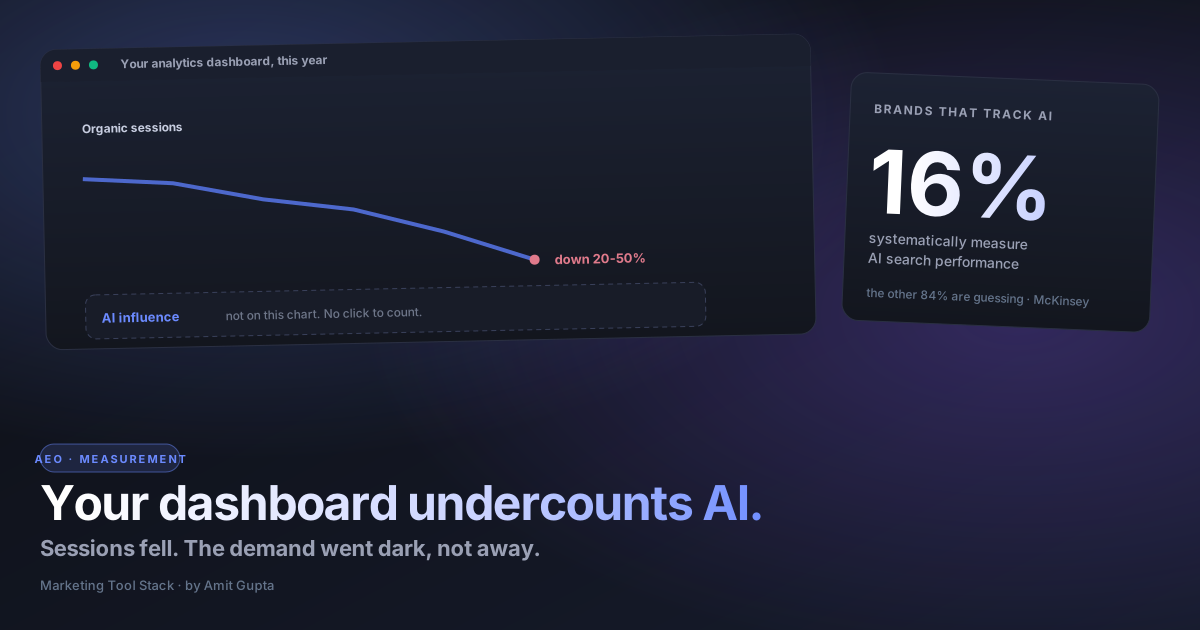

Only 16% of brands systematically track how they show up in AI search, while McKinsey warns that unprepared brands could lose 20% to 50% of their traditional search traffic. Sit with those two numbers together. Most companies are about to watch a core channel shrink on a dashboard that can't see where the demand went.
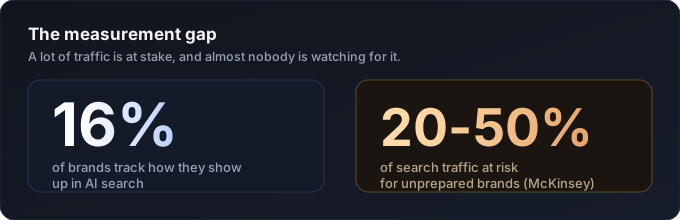
The problem isn't only that traffic is moving. It's that the instrument you use to measure marketing was built for clicks, and the new influence doesn't produce one. So it reads as nothing.
Why the dashboard lies
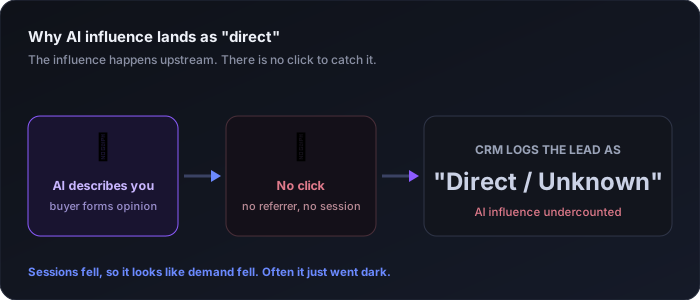
Your analytics counts sessions. A session needs a click. But an AI answer influences a buyer without a click: they ask ChatGPT about your category, it describes you, they form an opinion, and either they never visit or they show up later typing your brand name directly. In your reports that second person looks like "direct" or "organic brand," not "AI told me about you." The influence happened. The instrument recorded nothing, or credited the wrong source.
This is why the 20-to-50% traffic drop is so easy to misread. When those sessions fall, the natural conclusion is that demand fell. Often it didn't. It went dark. The buyer still got influenced, upstream, inside an answer you never saw and can't currently count.
The gap has a size, and it's your own channels
McKinsey also found that a brand's own channels make up only 5% to 10% of the sources an AI answer draws from. Read that as a measurement problem, not just a content one. The other 90% of what shapes your buyer's first impression happens on pages you don't own and don't instrument. If you only watch your own properties, you are watching a tenth of the story.
How do you measure something with no click?
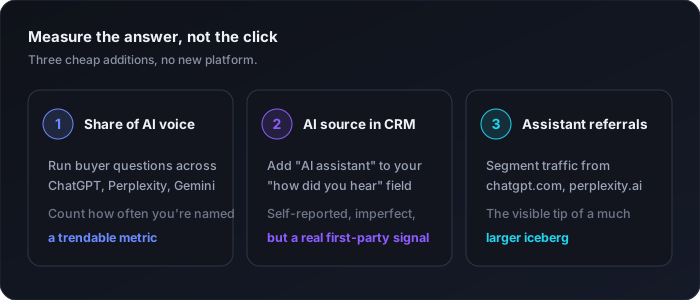
You stop waiting for the click and measure the answer directly. Three additions, none of them a new platform:
Track your share of AI voice. Pick the questions a buyer asks about your category, run them across ChatGPT, Perplexity and Gemini on a schedule, and record how often you're named and how you're described. That's a real, trendable metric for a channel that produces no sessions. I wrote a full how-to in this piece on measuring share of AI voice.
Add an AI source to lead capture. Put "AI assistant (ChatGPT, Perplexity, Gemini)" as an option in your "how did you hear about us" field, on forms and in sales discovery. Self-reported attribution is imperfect, but for a click-less channel it's often the only first-party signal you'll get, and a rising count there is a real trend line.
Watch referrals from the assistants. Some AI answers do link out. Segment referral traffic from chatgpt.com, perplexity.ai and the rest, and treat it as the visible tip of a much larger iceberg of influence you can't see.
The honest limit
None of this is precise. Share of AI voice varies run to run, self-reported source data is messy, and referral segments catch only the answers that happened to link. Anyone selling you a clean, deterministic "AI attribution" number is overselling. But messy and real beats precise and blind. The 16% of brands that measure this at all will make better calls than the 84% staring at a sessions chart, arguing about whether demand fell.
While you're at it, make sure the pages the engines do read are worth quoting. You can score a page for answer-first structure with my free SEO + AEO Content Rater before you ship it. So before your next QBR, one question: if someone asked how much pipeline AI search influenced last quarter, could you answer with anything better than a shrug?
Amit