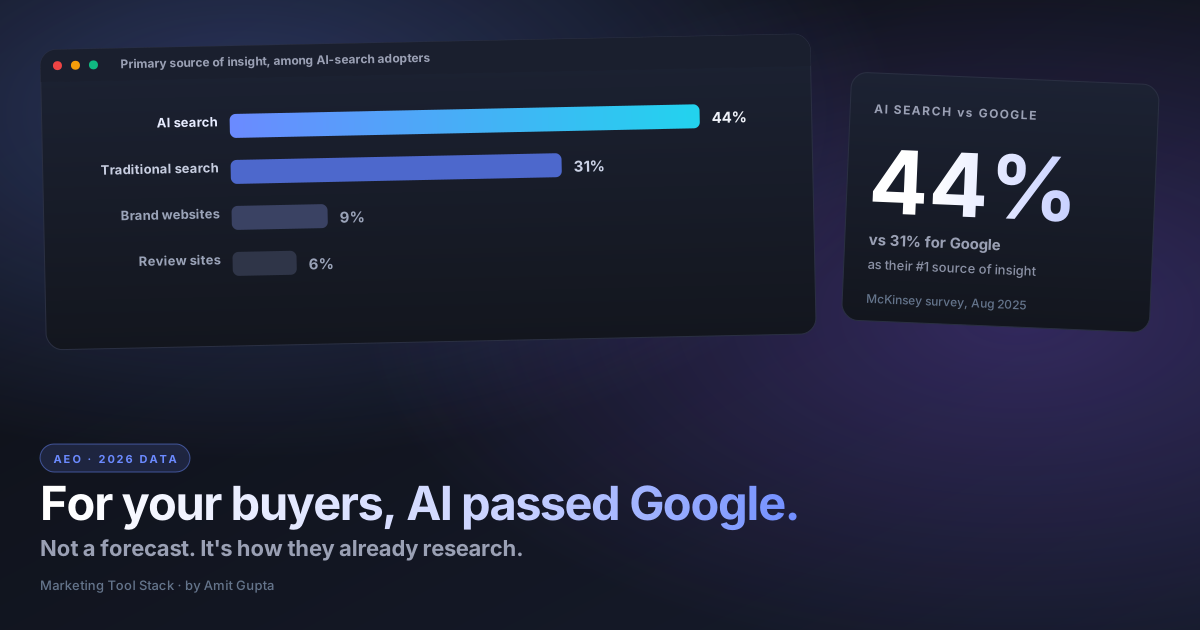

Among the people who have already adopted AI search, 44% now call it their primary and preferred source of insight. Traditional search gets 31%. That's from McKinsey's August 2025 survey, and the important word is "already." This isn't a forecast about where discovery is heading. It's where a specific, valuable slice of your buyers already are.
I want to be careful with this number, because it's easy to misread in both directions. It does not say half the planet dropped Google. It says something narrower and, for B2B, more useful.
The number is about who, not how many
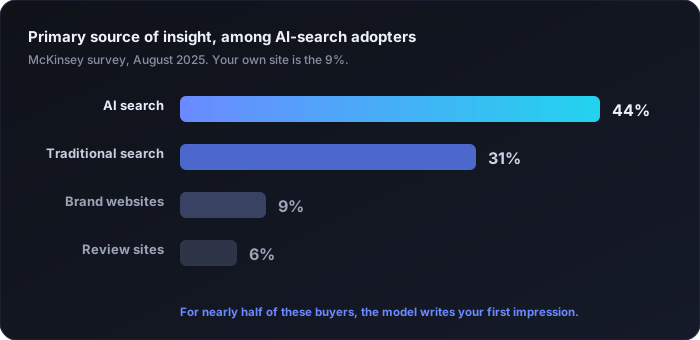
Read it precisely. Among users who have adopted AI-powered search, 44% treat it as their number one source, ahead of traditional search at 31%, retailer and brand websites at 9%, and review sites at 6%. It's a preference ranking inside the group that has already made the switch, not a share of the whole population.
That framing matters because of who those adopters are. Early AI-search adoption skews toward technical, higher-income, business buyers. In other words, the exact people a B2B company sells to are over-represented in the group that has already reordered how it researches. You may not have hit "half of everyone" yet. You have very likely hit half of the buyers who matter to you.
What 44 versus 31 actually costs you
Look at the bottom of that list. Brand websites, your site, are the primary source for 9% of these users. The AI answer is the primary source for 44%. So for nearly half of your researched-in-AI buyers, the first and most trusted description of your product is not written by you. It's assembled by a model from whatever it found, and handed over before anyone visits a page you control.
That is the real shift. For fifteen years, ranking on page one meant the buyer landed on your words. Now the buyer often lands on the model's summary of your words, or worse, the model's summary of a competitor's take on you. Being named and described accurately inside that answer is the new version of ranking, and you have less direct control over it.
This is not "AI killed search," so don't overreact
The honest counterweight. Traditional search is still enormous, still 31% even inside the adopter group, and far larger across everyone who hasn't switched. Google isn't gone. Plenty of buyers still open a blue link. If you burn down your SEO because of one survey, you'll regret it.
The correct read is quieter. A large, high-value share of your buyers now form their first impression of you inside an AI answer, and that share is growing from the top of your market down. You don't abandon search. You add a second front, and you start measuring the one you've been ignoring.
What to actually do about it
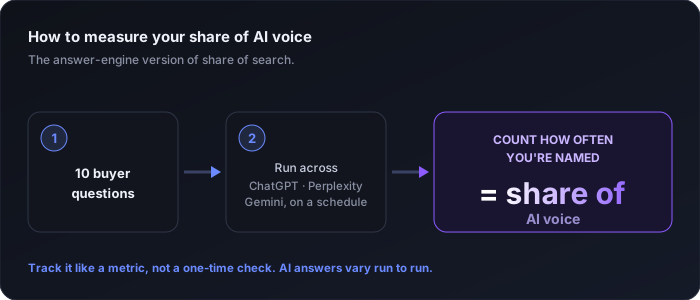
Two moves, both boring, both cheap. First, find out whether you're even in the answer. Pick the ten questions a buyer would ask about your category, run them across ChatGPT, Perplexity and Gemini on a schedule, and track how often you're named and how you're described. That's your share of AI voice, and I wrote a full walkthrough of running it yourself in this piece on measuring share of AI voice.
Second, make the pages the model reads worth quoting. Answer the buyer's real question in the first two sentences, in visible text, because that's what the machine lifts. You can pressure test a page for that structure with my free SEO + AEO Content Rater before you publish it. Neither move is a moonshot. Together they mean that when 44% of your buyers ask a machine about your category, your name is in the answer and the description is one you'd actually sign off on.
So here's the question worth sitting with. If nearly half your buyers now meet you first inside an AI answer you didn't write, do you even know what that answer currently says about you?
Amit