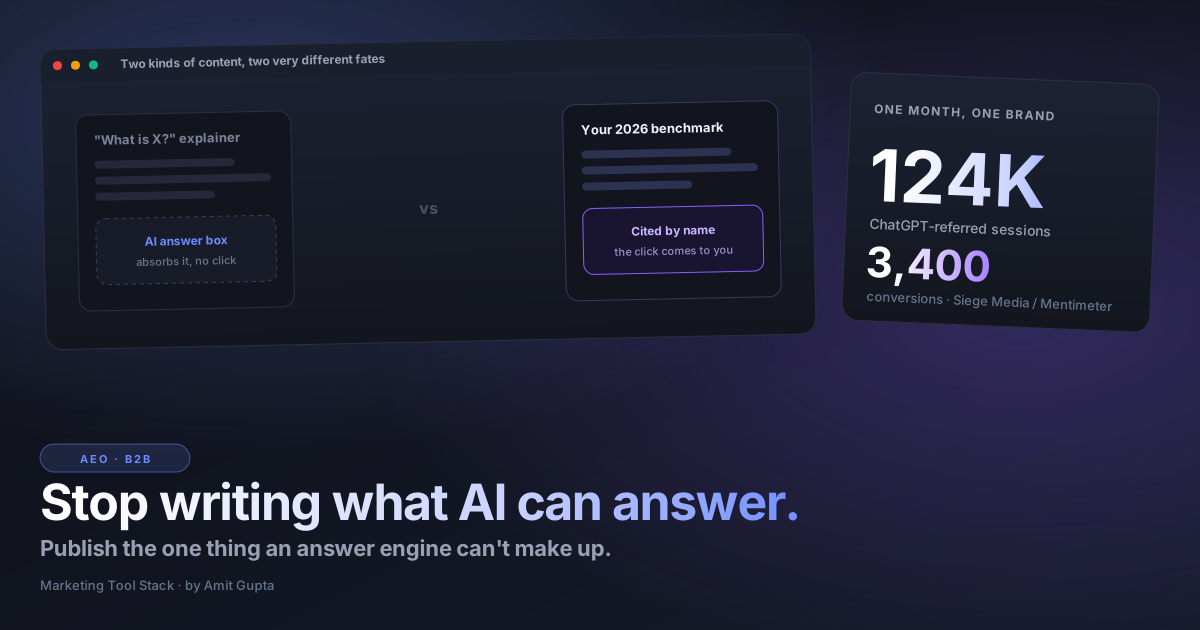

One presentation software company pulled about 124,000 ChatGPT-referred sessions and 3,400 conversions in a single month. Not from ranking. From publishing the one kind of content an answer engine can't make up on its own, then structuring it so the machine could quote it cleanly. That is the whole game now, and it flips the last decade of content advice on its head.
The uncomfortable truth for B2B content teams in 2026 is that most of what you were told to publish is now raw material for a machine that answers the question before anyone reaches your page. The winning move isn't more of it. It's the opposite: write the things the machine can't.
The content that used to work is the content AI eats
For fifteen years the SEO playbook was to own the top of the funnel. Write the definitive "what is X" explainer, rank it, collect the traffic, nudge people down. That funnel had a leak this year, and the leak is the answer box.
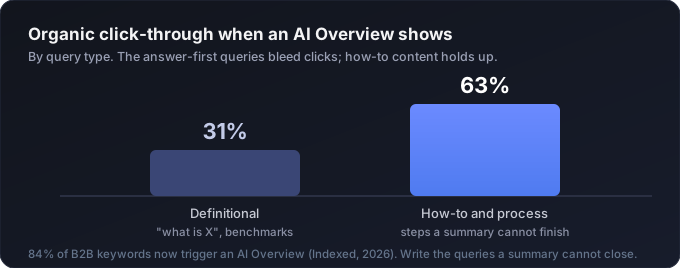
A 2026 CTR study from Indexed found that roughly 84% of B2B keywords now trigger a Google AI Overview. On the definitional and metrics queries, the exact "what is X" and "X benchmarks" phrasing your buyers use to learn a category, organic click-through has fallen as low as 31%. The answer sits at the top, complete, and two of three searchers never scroll. The one query type that held up better in the same data was how-to and process content, closer to a 63% click rate, because a real procedure is harder for a summary to fully replace.
Similarweb's clickstream read the same way from the publisher side. As zero-click search climbed to roughly 68% of queries, the sites that clustered in the losing group were the pure information publishers, the ones whose whole model was answering common questions. If your content is a tidy summary of things that are true everywhere, you built the exact asset an answer engine was designed to absorb.
What can an answer engine not synthesize?
An answer engine is a synthesis machine. It is very good at blending what many sources already say into one clean paragraph. It is bad, structurally, at producing anything that exists in only one place. That gap is your content strategy.
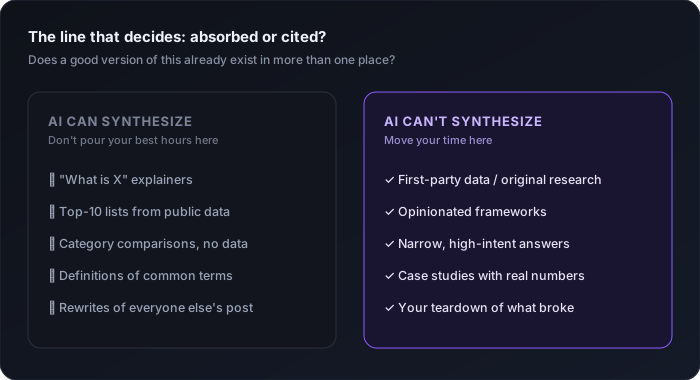
First-party data and original research. A benchmark you ran, a survey of your own customers, a number nobody else has. The model has to attribute it because it can't reconstruct it from the rest of the web. This is the single most valuable thing a B2B team can publish right now.
Opinionated frameworks that need judgment. A point of view on how to sequence a migration, where a common approach breaks, what you would do differently. Synthesis flattens into the safe average. A strong, specific opinion stands out because the average can't contain it.
Narrow, high-intent answers. Not "what is lead scoring" but "why our lead scoring model kept flagging the wrong accounts and the three fields we changed." The long tail of specific, lived problems is too niche for a generic summary and exactly what a buyer types into an answer engine at the point of pain.
Case studies with real numbers. Named, dated, with the actual figures. A result that happened once, to one team, is not something a model can average into existence.
What Mentimeter actually did
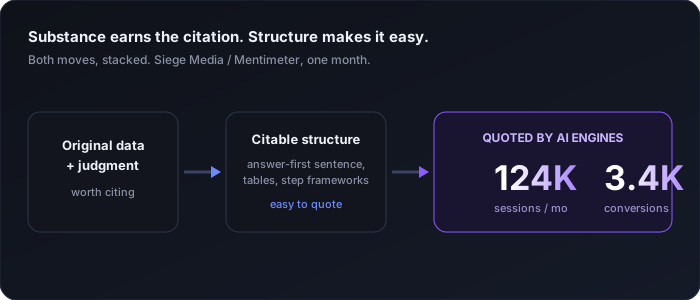
Back to the 124,000 sessions. Siege Media reported that result from work with Mentimeter, and the interesting part isn't the volume, it's the method. They didn't win by writing more explainers. They made their content the most quotable version of the answer: definitions in the opening sentence, data in tables instead of buried in prose, step frameworks a model can lift whole, and they seeded the brand into the comparison and directory pages that answer engines lean on when they recommend tools.
Read that as two moves stacked. Publish something worth citing, then format it so citing it is the path of least resistance. The 3,400 conversions matter more than the sessions, because they answer the obvious objection. This wasn't junk traffic. Content built to be cited pulled people who were ready to act.
How do you audit your own content for this?
Run every page you publish through one question: could an answer engine produce a good version of this from everything else on the web? If yes, you are feeding the machine that replaces you. If no, you have something worth citing.
Then split your inventory. The generic explainers keep them lean, keep them accurate, but stop pouring your best hours into them. Move that time to the proprietary side: the survey, the teardown, the framework, the case study. When you do publish, structure it so the machine can grab it. Put the answer in the first two sentences, use real question headings, keep paragraphs short, and lead with the number. You can pressure-test that structure with my free SEO + AEO Content Rater, which scores direct-answer sentences, question headings, and paragraph length as a separate sub-grade from classic SEO. It won't judge whether your idea is original. That part is on you.
The part nobody wants to hear
This strategy means publishing less. Fewer posts, each one harder to make, because original data and real opinions cost more than a rewritten explainer. A lot of content calendars are built to hit a volume number, and this breaks that number on purpose. That is the point. Ten commodity posts an answer engine can replace are worth less than one teardown it has to quote.
The teams winning AI referral traffic in 2026 didn't out-publish anyone. They stopped competing on the ground where a machine has every advantage, and moved to the ground where being the single source is the whole moat. So look at your next quarter's content plan and ask the only question that matters now: how much of this could ChatGPT have written without you?
Amit