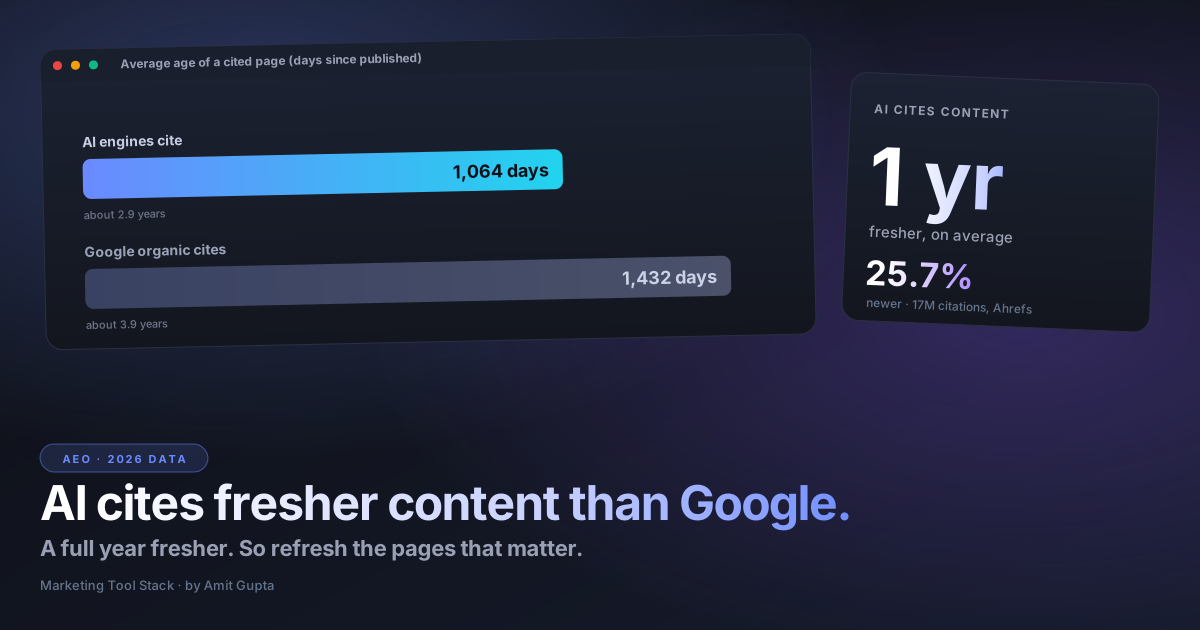

When an AI answer engine cites a page, that page is on average about 1,064 days old. When Google's organic results cite one, it's 1,432 days old. That's a full year newer, roughly 25% fresher, and it comes from a study of about 17 million citations. If you have a stack of pillar posts quietly aging, this is the number that says to go update them.
Freshness is one of the few AEO levers with hard data behind it instead of vendor folklore. But the same study also says something a lot of "refresh everything" advice leaves out, so let's take both halves seriously.
What 17 million citations actually show
Ahrefs pulled citations across ChatGPT, Perplexity, Gemini, Copilot and Google's AI Overviews and compared the age of what got cited against what ranks in classic organic search. The AI engines cited pages averaging 1,064 days since publication, about 2.9 years. Organic search cited pages averaging 1,432 days, about 3.9 years. One full year of difference in what the two systems reach for.
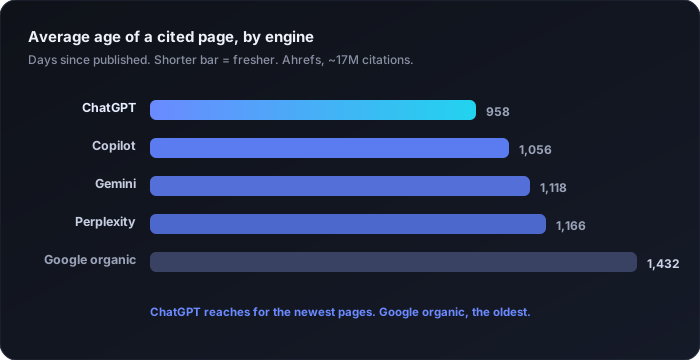
The gap isn't even across engines. ChatGPT showed the strongest pull toward new content, citing pages hundreds of days newer than Google's organic results on the same queries. Perplexity, Gemini and Copilot leaned fresher too, just less aggressively. Google's own AI Overviews and organic results were the most comfortable citing older pages. So if ChatGPT is where your buyers are asking, freshness matters to you more, not less.
Freshness is a signal, not a silver bullet
Here's the half the hype skips. Even the AI-cited pages average 2.9 years old. The engines are not chasing content published this week. They still lean heavily on established, linked, proven pages. Freshness nudges the odds. It does not override authority, depth, or whether the page actually answers the question.
So read the finding correctly. A recent, current version of a strong page beats the same page left to rot. But a brand-new thin page does not beat a deep, trusted one just because it's newer. Refreshing is a multiplier on content that already deserves to rank, not a shortcut around earning that in the first place.
What should you actually refresh?
Don't refresh everything. Refresh the pages that already earn citations or rank, where a stale detail is now the weakest part. Three targets pay off most:
Pillar posts with dated facts. Anything with a statistic, a platform behavior, a price, or a "as of" claim. Update the number, and update it to a real current figure, not a rounded guess. The engine reads the visible number, so change the number.
Resource and reference pages. The lists, the glossaries, the "state of X" pages people and models return to. These earn their freshness value by actually reflecting this year, so add what changed and cut what died.
Anything with the wrong year in it. A page that says "in 2024" reads as three years stale to a model scanning for recency. If the point still holds, say 2026 and make sure the surrounding claim is still true.
The date-stamp trap
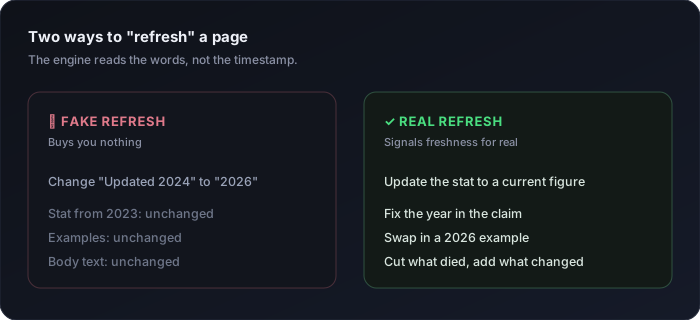
The lazy version of this is to bump the "last updated" date and change nothing. Skip it. The machines read the visible content, not just the timestamp, so a fresh date on stale text buys you nothing and trains your own team to fake work. Real freshness means the words changed: a new stat, a new example, a section that reflects how the thing works now.
A quick way to check whether a page even signals freshness the way an engine looks for it is to run it through my free SEO + AEO Content Rater. One of its AEO checks is exactly this: does the page carry a current-year or "updated" signal, and is the answer near the top where the engine reads first. It won't tell you the content is actually new. That judgment is yours. It will tell you if you forgot to signal it at all.
Put it on a cadence, not a panic
The teams that win here don't do a heroic one-time refresh and forget it. They pick their twenty most important pages and put a light review on a schedule, a couple a month, updating the number and the example whenever reality moved. That's the whole tactic. Boring, cheap, and measurably preferred by the engines your buyers now ask first. So when did you last read your best-performing post and check whether a single number in it is still true?
Amit