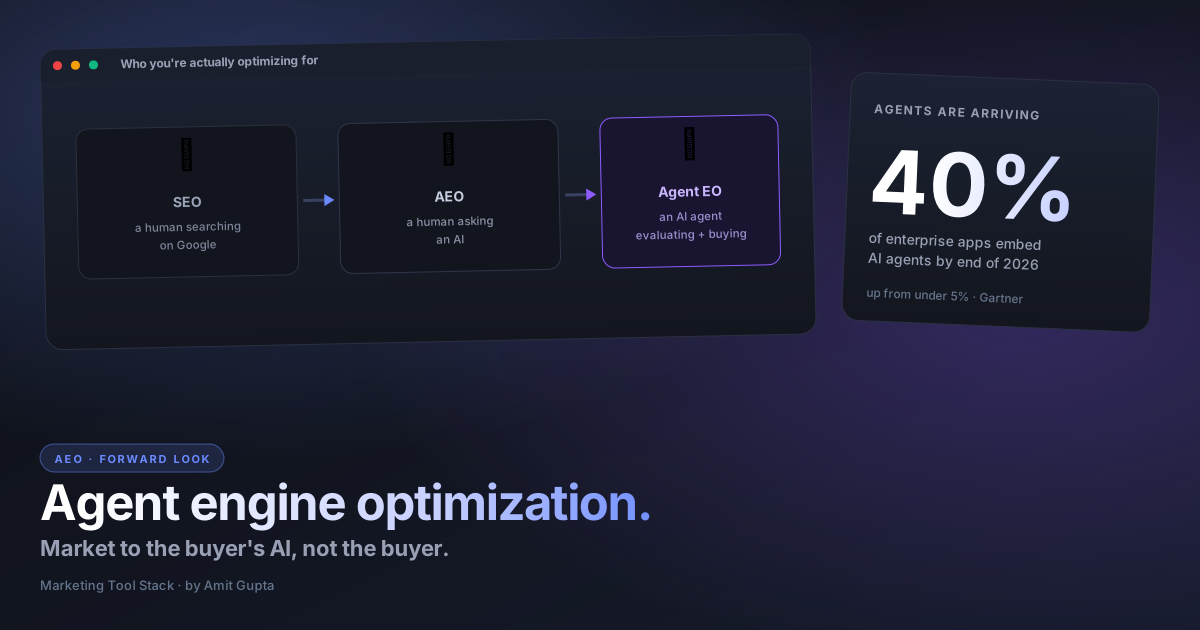

Gartner's 2026 strategic predictions include a line worth stopping on: traditional SEO and PPC will give way to "agent engine optimization." The idea is that your next buyer might not be a person at all. It might be an AI agent, sent to evaluate vendors, compare specs, and buy, and it reads your site nothing like a human does.
This one is a forecast, not a measured fact, so I'll treat it that way. But the direction is clear enough, and cheap enough to prepare for, that ignoring it is the risky choice.
What is agent engine optimization?
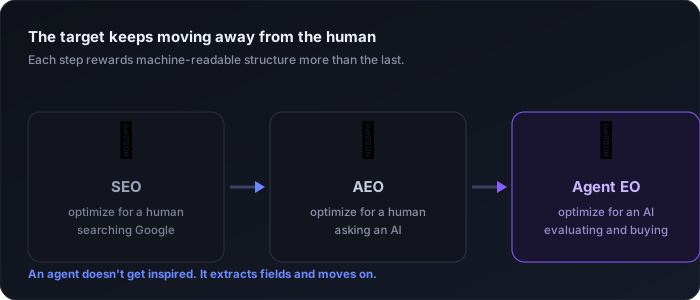
Answer engine optimization is about getting cited when a human asks an AI a question. Agent engine optimization is the step past that: getting selected when an AI acts on the human's behalf. Gartner's framing is that products will need to be machine-readable, and procurement will shift toward autonomous, machine-to-machine transactions. The buyer briefs an agent, the agent does the shortlisting and the comparison, and a human signs off at the end, if at all.
That changes who your marketing talks to. A landing page written to make a person feel something is close to useless to an agent parsing for price, spec, integration support and compliance. The agent doesn't get inspired. It extracts fields and moves on.
Is this actually happening, or is it hype?
Both, honestly, and you should hold the two apart. The far-out version, where agents run most business buying, is a prediction with a date attached and I wouldn't plan a quarter around it. Predictions like that get quoted as fact constantly, and they shouldn't be.
The near-term signal is firmer. Gartner expects about 40% of enterprise applications to embed AI agents by the end of 2026, up from under 5% in 2025. That's not agents buying yet, but it's agents arriving inside the tools your buyers already use. The plumbing is going in now. The buying behavior follows the plumbing.
What to build now, without betting the company
The good news is that preparing for agents is the same work as being readable to answer engines and honest with humans. You are not building a separate agent funnel. You are making your existing facts extractable. Three moves:
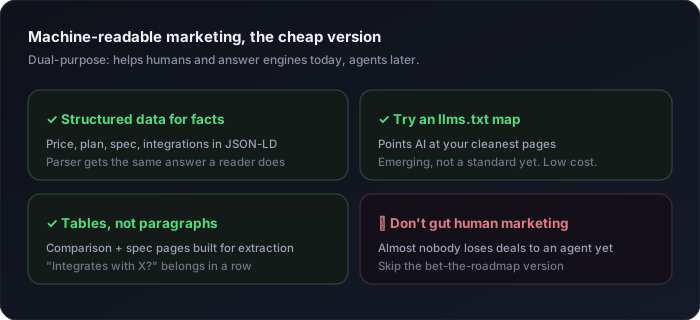
Put your real facts in structured data. Price, plan, spec, integration list, support terms. Mark them up with clean schema.org JSON-LD so a parser gets the same answer a reader does. My free FAQ Schema Generator is one small piece of that: it turns question-and-answer content into valid FAQPage markup an engine can lift directly.
Write comparison and spec pages for extraction. Tables, not paragraphs, for anything an agent would line up against a competitor. If the answer to "does it integrate with X" is buried in a testimonial, the agent misses it. Put it in a row.
Consider an llms.txt file. It's an emerging convention, a plain text map at your root that points AI systems at your most important, cleanest pages. It is not a standard every engine honors yet, so treat it as a low-cost experiment, not a guarantee. The cost is an afternoon. The downside is nothing.
The honest caveat: don't over-rotate
Here's where I'd pump the brakes. Almost nobody is losing deals to a purchasing agent today. Your buyers are still humans who read, compare, and get talked into things. If you gut your human-facing marketing to court agents that aren't buying yet, you'll lose real revenue chasing a forecast.
So do the cheap, dual-purpose work: structured facts, clean comparison pages, maybe an llms.txt. That helps humans and answer engines right now and positions you for agents later, at almost no cost. Skip the expensive bet-the-roadmap version until the buying behavior is actually here. When a machine finally reads your site to decide whether to buy, will it find your price and your spec, or a paragraph about your mission?
Amit